FOLIO I · THINKER · GEN. 03 · N° 067

William Emmanuel Rappard

Works
8
Articles
0
Generation
3.
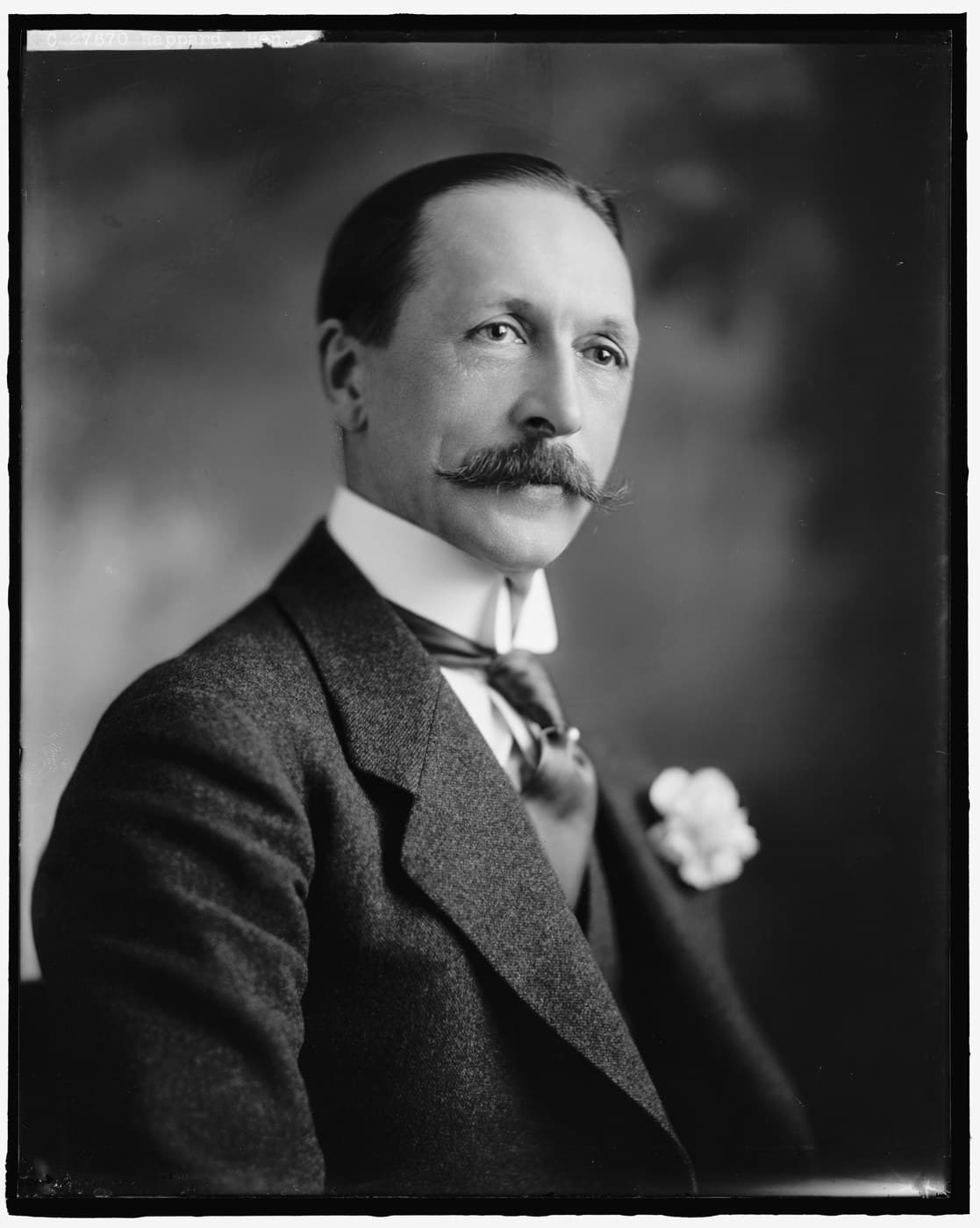
Portrait of William Emmanuel Rappard
FOL. 03 · N° 067 · William Emmanuel Rappard
BIOGRAPHY

Life and Work

William Emmanuel Rappard was born on 22 April 1883 in New York City, the son of the Swiss embroidery merchant Auguste Rappard and Julie, née Hoffmann. After primary school in New York he attended the Gymnasium in Geneva from 1899 to 1901. He obtained a licentiate in 1906 and a doctorate in law in 1908 at the University of Geneva; in parallel, study visits between 1905 and 1909 took him to Berlin, Munich, Harvard, Paris, and Vienna. In Vienna, in 1908 and 1909, he attended the seminars of Eugen von Böhm-Bawerk and Eugen Philippovich, which shaped his approach to economics; he developed his historiographical programme under the influence of Carl Grünberg. In 1909 and 1910 Rappard worked as an assistant at the International Labour Office in Basel, in 1910 and 1911 as deputy professor of economic history in Geneva, and in 1912 as assistant professor of economics at Harvard. In 1913 he was appointed to the University of Geneva, where he held the chair of economic history until 1928 and the chair of public finance from 1915 to 1957. Twice he served as the university's rector (1926 to 1928, 1936 to 1938). As the official representative of the Federal Council at the Paris Peace Conference in 1919, he secured the choice of Geneva as the seat of the League of Nations and Switzerland's accession while preserving its neutrality. Between 1920 and 1924 he headed the League of Nations Mandates Section, and from 1925 to 1939 he belonged to the Permanent Mandates Commission. In 1927 Rappard founded, together with Paul Mantoux, the "Institut universitaire de hautes études internationales" (IHEID), the world's first graduate school devoted solely to international studies. As co-director (1928 to 1951) and director (1951 to 1955) he gave the Geneva School its liberal character. In March 1934 he offered Ludwig von Mises a professorship in international economic relations, which Mises took up in October 1934 and held until his emigration to the United States in July 1940. Hans Kelsen, Wilhelm Röpke, and Michael Heilperin were also among Rappard's appointments; Friedrich Hayek gave guest lectures at the institute. This Geneva constellation carried a core of Central European liberal scholarship through the war. On 1 April 1947 Rappard opened the founding meeting of the Mont Pèlerin Society, which Hayek had convened on Lake Geneva. A pragmatic liberal, averse to any dogmatism, he wrote numerous studies in economic and constitutional history, among them the early Swiss standard work "Le facteur économique dans l'avènement de la démocratie moderne en Suisse" (The Economic Factor in the Advent of Modern Democracy in Switzerland) (1912), "The Crisis of Democracy" (1938), and "The Secret of American Prosperity" (1955). He died on 29 April 1958 in Bellevue near Geneva. His name lives on in Geneva's Centre William Rappard, today the seat of the World Trade Organization.
Metadata
22. April 1883
29. April 1958
Generation 3
Life stations

Stations

  1. ⁦1899–1901⁩
    ⁦1899–1901⁩
    Gymnasium in Genf

    Nach der Primarschule in New York Übersiedlung der Familie nach Genf; Mittelschulzeit im Stammkanton.

  2. ⁦1905–1909⁩
    ⁦1905–1909⁩
    Studienaufenthalte an mehreren Universitäten

    Parallel zum Genfer Hauptstudium Aufenthalte u. a. in Berlin und München; Harvard-Graduate-Studium 1906–1908; Wien 1908/09 mit Seminaren bei Eugen von Böhm-Bawerk und Eugen Philippovich.

  3. 1906
    1906
    Lizenziat der Rechte, Universität Genf

    Abschluss des Grundstudiums in Genf.

  4. 1908
    1908
    Dr. iur., Universität Genf

    Promotion zum Doktor der Rechte an der Universität Genf.

  5. ⁦1909–1910⁩
    ⁦1909–1910⁩
    Assistent am Internationalen Arbeitsamt

    Erste berufliche Station am Internationalen Arbeitsamt in Basel.

  6. ⁦1910–1911⁩
    ⁦1910–1911⁩
    Stellvertretender Professor für Wirtschaftsgeschichte

    Übernahme der Wirtschaftsgeschichte an der Universität Genf in Vertretung.

  7. ⁦1912–1913⁩
    ⁦1912–1913⁩
    Assistant Professor of Economics, Harvard

    Lehrtätigkeit als Assistenzprofessor für politische Ökonomie an der Harvard University.

  8. ⁦1913–1928⁩
    ⁦1913–1928⁩
    Ordinarius für Wirtschaftsgeschichte, Universität Genf

    Berufung auf den Lehrstuhl für Wirtschaftsgeschichte an der Universität Genf.

  9. ⁦1915–1957⁩
    ⁦1915–1957⁩
    Ordinarius für öffentliche Finanzen, Universität Genf

    Parallele Professur für öffentliche Finanzen, gehalten über vier Jahrzehnte bis kurz vor dem Tod.

  10. 1919
    1919
    Vertreter des Bundesrats, Friedenskonferenz Paris

    Setzte als offizieller Schweizer Vertreter Genf als Sitz des Völkerbunds und den Schweizer Beitritt unter Neutralitätsvorbehalt durch.

  11. ⁦1920–1924⁩
    ⁦1920–1924⁩
    Leiter der Sektion Völkerbundsmandate

    Direktor der Mandates Section beim Völkerbund-Sekretariat in Genf.

  12. ⁦1925–1939⁩
    ⁦1925–1939⁩
    Mitglied der ständigen Mandatskommission

    Über vierzehn Jahre Mitglied der Permanent Mandates Commission des Völkerbunds.

  13. ⁦1926–1928⁩
    ⁦1926–1928⁩
    Rektor der Universität Genf (erste Amtszeit)

    Erste von zwei Rektoratsperioden an der Universität Genf.

  14. 1927
    1927
    Gründung des Institut universitaire de hautes études internationales

    Mitgründer des IHEID mit Paul Mantoux, der weltweit ersten Graduate School für internationale Studien.

  15. ⁦1928–1951⁩
    ⁦1928–1951⁩
    Kodirektor des IHEID

    Gemeinsame Leitung des Genfer Instituts mit Paul Mantoux; prägt das liberale Profil der Schule.

  16. ⁦1934–1940⁩
    ⁦1934–1940⁩
    Berufung Ludwig von Mises ans IHEID

    Im März 1934 bietet Rappard Mises die Professur für International Economic Relations an; Mises tritt im Oktober 1934 an und bleibt bis Juli 1940.

  17. ⁦1936–1938⁩
    ⁦1936–1938⁩
    Rektor der Universität Genf (zweite Amtszeit)

    Zweite Rektoratsperiode in den späten 1930er Jahren.

  18. ⁦1941–1943⁩
    ⁦1941–1943⁩
    Nationalrat (Landesring der Unabhängigen)

    Schweizer Parlamentarier für den Landesring der Unabhängigen im Zweiten Weltkrieg.

  19. 1947
    1947
    Eröffnungsansprache Mont-Pèlerin-Gründung

    Hält am 1. April 1947 die Eröffnungsansprache der Gründungstagung der Mont-Pèlerin-Gesellschaft am Genfersee.

  20. ⁦1951–1955⁩
    ⁦1951–1955⁩
    Direktor des IHEID

    Alleinige Leitung des Genfer Instituts nach Mantoux' Ausscheiden.

  21. 1958
    1958
    Tod in Bellevue

    Stirbt am 29. April 1958 in Bellevue bei Genf, eine Woche nach seinem 75. Geburtstag.

Relationships

Influences

Influenced by · 5
  1. ⁦1908–1909⁩
    ⁦1908–1909⁩

    Rappard attended Böhm-Bawerk's Viennese seminar in 1908/09, one of the most formative teachers of the Austrian School before the First World War.

  2. ⁦1908–1909⁩
    ⁦1908–1909⁩

    Alongside Böhm-Bawerk, Rappard attended Philippovich's seminars in Vienna in 1908/09.

  3. ⁦1934–1940⁩
    ⁦1934–1940⁩
    Hans Kelsen⁦(1881–1973)⁩ · Wiener Rechtstheorie

    Rappard appointed Kelsen to the IHEID to the chair of international law; together part of the Geneva faculty of the 1930s.

  4. ⁦1937–1958⁩
    ⁦1937–1958⁩
    Wilhelm Röpke⁦(1899–1966)⁩ · Ordoliberalismus

    Röpke first came to the IHEID as a visiting lecturer and subsequently became a regular professor of International Economic Relations; with Rappard a cornerstone of the Geneva liberal school.

  5. ⁦1947–1958⁩
    ⁦1947–1958⁩
    Mont Pèlerin Society · Sammelknoten Mont Pèlerin Society

    On 1 April 1947 Rappard delivered the opening address of the Mont Pèlerin founding conference on Lake Geneva and belonged to the Swiss founding circle around Hayek.

William Emmanuel Rappard in the context of the School as a whole: five generations, their teacher-student lineages, circles and collegial ties.

Topography

Places of Activity

CATALOGUE OF WORKS · CHRONOLOGICAL

The Books

1910s
1912
Le facteur économique dans l'avènement de la démocratie moderne en Suisse, Band I
OriginalFrench
1914
La révolution industrielle et les origines de la protection légale du travail en Suisse
OriginalFrench
1920s
1925
International Relations as Viewed from Geneva
OriginalEnglish
1930s
1930
Uniting Europe: The Trend of International Cooperation since the War
OriginalEnglish
1936
L'individu et l'Etat dans l'évolution constitutionnelle de la Suisse
OriginalFrench
1938
The Crisis of Democracy
OriginalEnglish
1940s
1948
Die Bundesverfassung der Schweizerischen Eidgenossenschaft, 1848–1948
OriginalGerman
1950s
1955
The Secret of American Prosperity
OriginalEnglish
APA
Chicago
German historical style