FOLIO I · THINKER · GEN. 02 · N° 059

Karl-Theodor von Inama-Sternegg

Works
6
Articles
0
Generation
2.
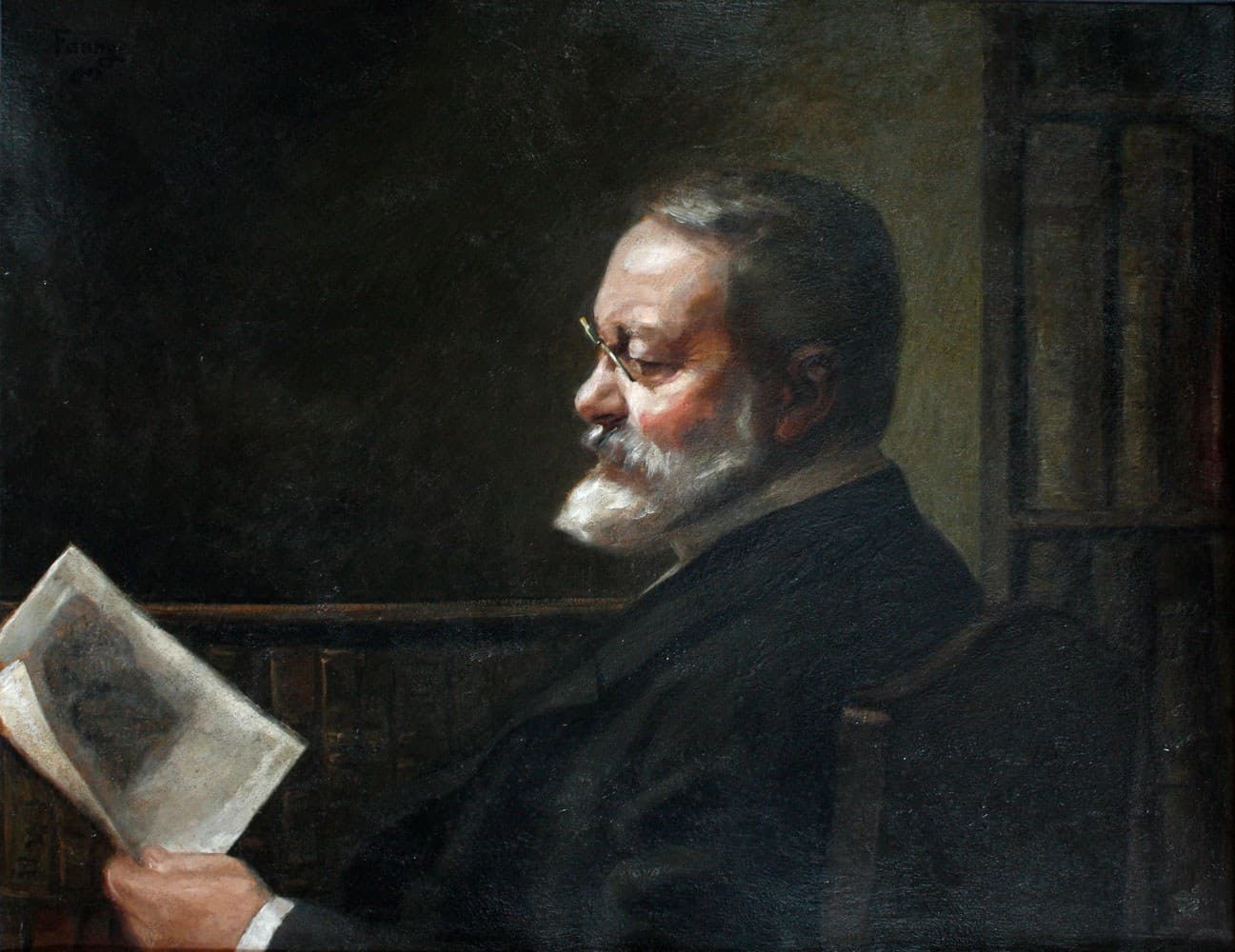
Portrait of Karl-Theodor von Inama-SterneggPortrait of Karl-Theodor von Inama-Sternegg: Hochgeladenes Bild
FOL. 02 · N° 059 · Karl-Theodor von Inama-Sternegg
BIOGRAPHY

Life and Work

Inama-Sternegg came from a family long settled in the Nonsberg region (today Val di Non) in Trentino and was the eldest son of the Royal Bavarian municipal court assessor Johann Nepomuk Inama von Sternegg. After secondary school in Neuburg an der Donau, Amberg and Munich, he studied law and political science as well as history from 1860 at the University of Munich, where in 1865 he received his doctorate (Dr. rer. pol.) with a prize essay on the economic consequences of the Thirty Years' War. After a court traineeship and his habilitation in 1868, he moved in the same year to the University of Innsbruck as associate professor, where in 1871 he became full professor of political science and in 1876/77 held the rectorship. In 1880 came the call to Prague as full professor of political economy; a year later he went to Vienna as director of the Bureau of Administrative Statistics. At the same time he taught as honorary professor of political science at the University of Vienna and, from 1882 to 1896, directed the Statistical Seminar, first alone and then together with his student Franz von Juraschek. Appointed Hofrat (court councillor) and president of the Imperial-Royal Central Statistical Commission in 1884, he developed the official statistics of the Cisleithanian (Austrian) half of the empire into a modern administrative apparatus. On his initiative, the census of 1890 was processed centrally by Theodor Schäffler using electric tabulating machines of the Hollerith-Schäffler system, which attracted international attention. In scholarly terms Inama belonged to the Historical School of economics, but held an independent position within it: he rejected the exaggerated inductivism of the younger generation around Gustav von Schmoller and defended the value of deduction. His programme was to combine the statistical and the historical method in order to present the course of development of social and economic conditions; the three-volume "Deutsche Wirtschaftsgeschichte" (German Economic History; 1879, 1899, 1901) is regarded as the first attempt at a comprehensive economic history of the German-speaking world. Apart from scholarship, from 1891 Inama was a life member of the Austrian House of Lords (Herrenhaus) and was active as president of the Society against Impoverishment and Begging. In 1899 he was elected president of the Institut International de Statistique. Honorary doctorates from the universities of Kraków, Czernowitz (today Chernivtsi), Cambridge and Vienna, as well as membership of the Viennese, the Prussian and the Leopoldine academies, underline his international standing. In 1905 he withdrew from active service to Lichtenwert Castle near Brixlegg, where he died three years later.
Metadata
20. Januar 1843
28. November 1908
in Innsbruck, Tirol
Generation 2
Life stations

Stations

  1. ⁦1860–1865⁩
    ⁦1860–1865⁩
    Studium Rechts- und Staatswissenschaften, Geschichte

    Studium an der Universität München, Promotion 1865 zum Dr. rer. pol. mit einer Preisarbeit über die wirtschaftlichen Folgen des Dreißigjährigen Krieges.

  2. 1865
    1865
    Promotion Dr. rer. pol.

    Promotion an der Universität München mit der Preisarbeit „Die volkswirtschaftlichen Folgen des 30jährigen Krieges für Deutschland“.

  3. 1868
    1868
    Habilitation, Privatdozent

    Habilitation an der Universität München; lehrte ein Semester als Privatdozent, bevor er nach Innsbruck wechselte.

  4. ⁦1868–1880⁩
    ⁦1868–1880⁩
    Ao. Professor, ab 1871 Ordinarius politische Wissenschaften

    Wechsel als außerordentlicher Professor nach Innsbruck, 1871 Ordinarius für politische Wissenschaften. Dekan 1872/73 und 1874/75, Rektor 1876/77.

  5. ⁦1876–1877⁩
    ⁦1876–1877⁩
    Mitglied des Tiroler Landtags

    Erste politische Funktion neben der Innsbrucker Professur, Mitgliedschaft im Tiroler Landtag.

  6. ⁦1880–1881⁩
    ⁦1880–1881⁩
    Ordinarius für politische Ökonomie

    Berufung als ordentlicher Professor für politische Ökonomie an die deutsche Universität Prag, nur ein Jahr vor dem Wechsel nach Wien.

  7. ⁦1881–1905⁩
    ⁦1881–1905⁩
    Direktor, ab 1884 Präsident k.k. Statistische Zentralkommission

    Aufbau und Reorganisation der amtlichen Statistik der cisleithanischen Reichshälfte; Verantwortung für die Volkszählungen 1880, 1890 (erstmals zentral mit Hollerith-Schäffler-Maschinen) und 1900. 1890 titulierter, 1894 wirklicher Sektionschef.

  8. ⁦1881–1905⁩
    ⁦1881–1905⁩
    Honorarprofessor für Staatswissenschaften

    Parallel zur amtlichen Statistik Honorarprofessur an der Universität Wien; Leitung des Statistischen Seminars 1882–96 allein, ab 1897 zusammen mit Franz von Juraschek.

  9. ⁦1891–1908⁩
    ⁦1891–1908⁩
    Mitglied des Herrenhauses auf Lebenszeit

    Lebenslange Berufung ins Herrenhaus des Reichsrats; setzte sich für eine Ausweitung des Wahlrechts und sozialpolitische Reformen ein.

  10. ⁦1899–1908⁩
    ⁦1899–1908⁩
    Präsident Institut International de Statistique

    Wahl zum Präsidenten des Internationalen Statistischen Instituts, Würdigung seiner internationalen Stellung im Fach.

  11. 1908
    1908
    Tod in Innsbruck

    Gestorben am 28. November 1908 in Innsbruck, nachdem er sich 1905 auf Schloss Lichtenwert bei Brixlegg zurückgezogen hatte.

Relationships

Influences

Influenced by · 2
  1. ⁦1882–1908⁩
    ⁦1882–1908⁩
    Franz von Juraschek

    Inama was the teacher and academic mentor of Franz von Jurascheck at the Statistical Seminar of the University of Vienna; from 1897 they ran the seminar jointly, and later Jurascheck succeeded Inama in heading the Statistical Central Commission.

  2. Gustav von Schmoller⁦(1838–1917)⁩ · Jüngere Historische Schule

    Methodologically, Inama belonged to the Historical School of economics around Schmoller, but retained an independent position and rejected the excessive inductivism of the Younger Historical School.

Karl-Theodor von Inama-Sternegg in the context of the School as a whole: five generations, their teacher-student lineages, circles and collegial ties.

CATALOGUE OF WORKS · CHRONOLOGICAL

The Books

1860s
1865
Die volkswirtschaftlichen Folgen des 30jährigen Krieges für Deutschland
OriginalGerman
1870s
1870
Verwaltungslehre in Umrissen
OriginalGerman
1876
A. Smith und die Bedeutung seines Wealth of Nations für die moderne Nationalökonomie
OriginalGerman
1879
Deutsche Wirtschaftsgeschichte
OriginalGerman
1890s
1892
Die persönlichen Verhältnisse der Wiener Armen
OriginalGerman
1900s
1903
Staatswissenschaftliche Abhandlungen
OriginalGerman
APA
Chicago
German historical style