FOLIO I · DENKER

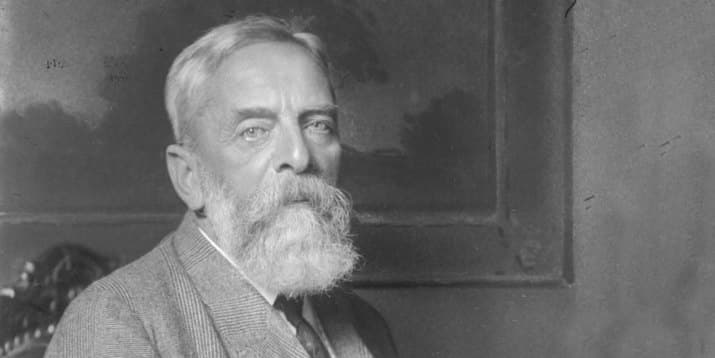
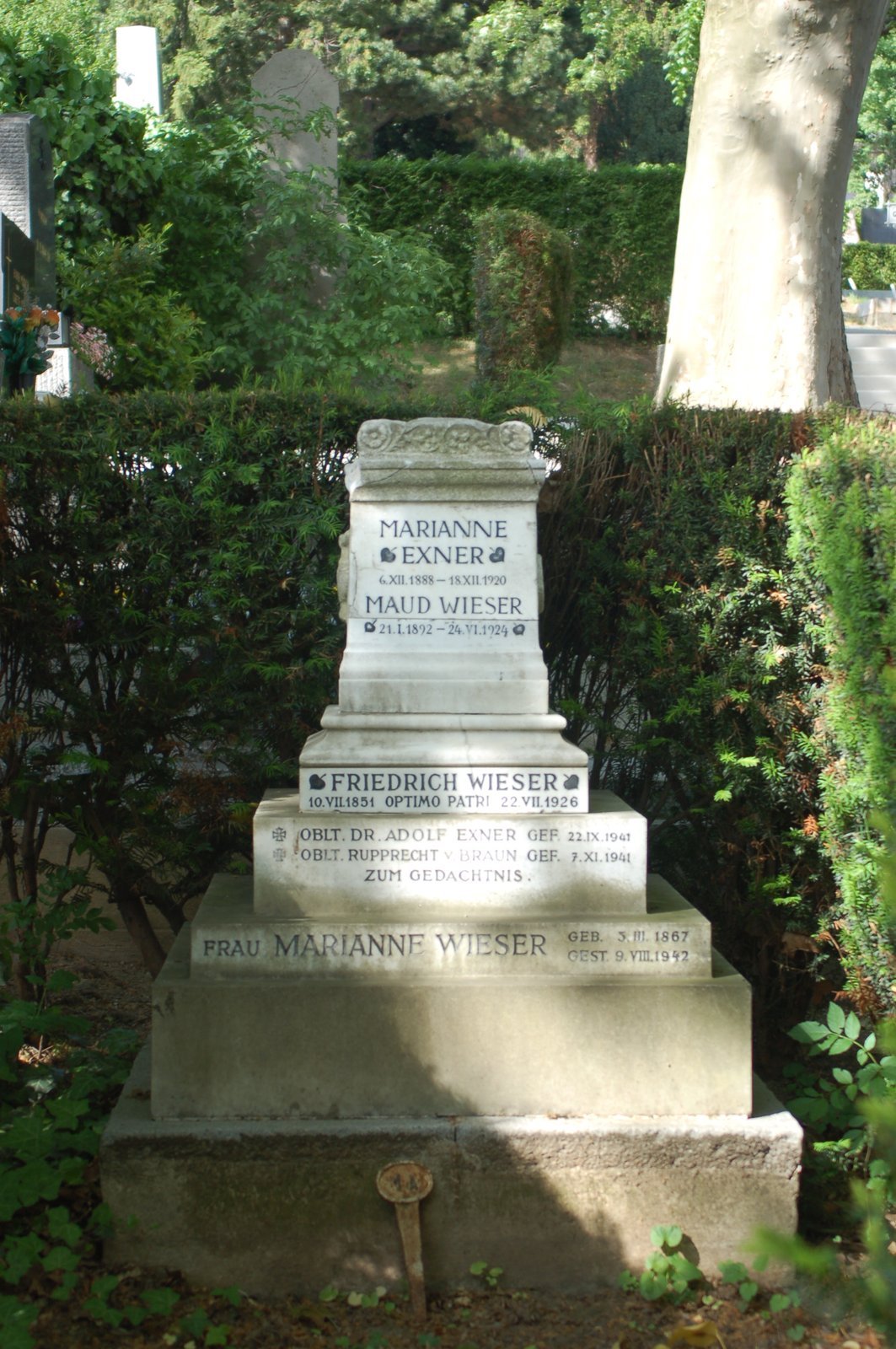
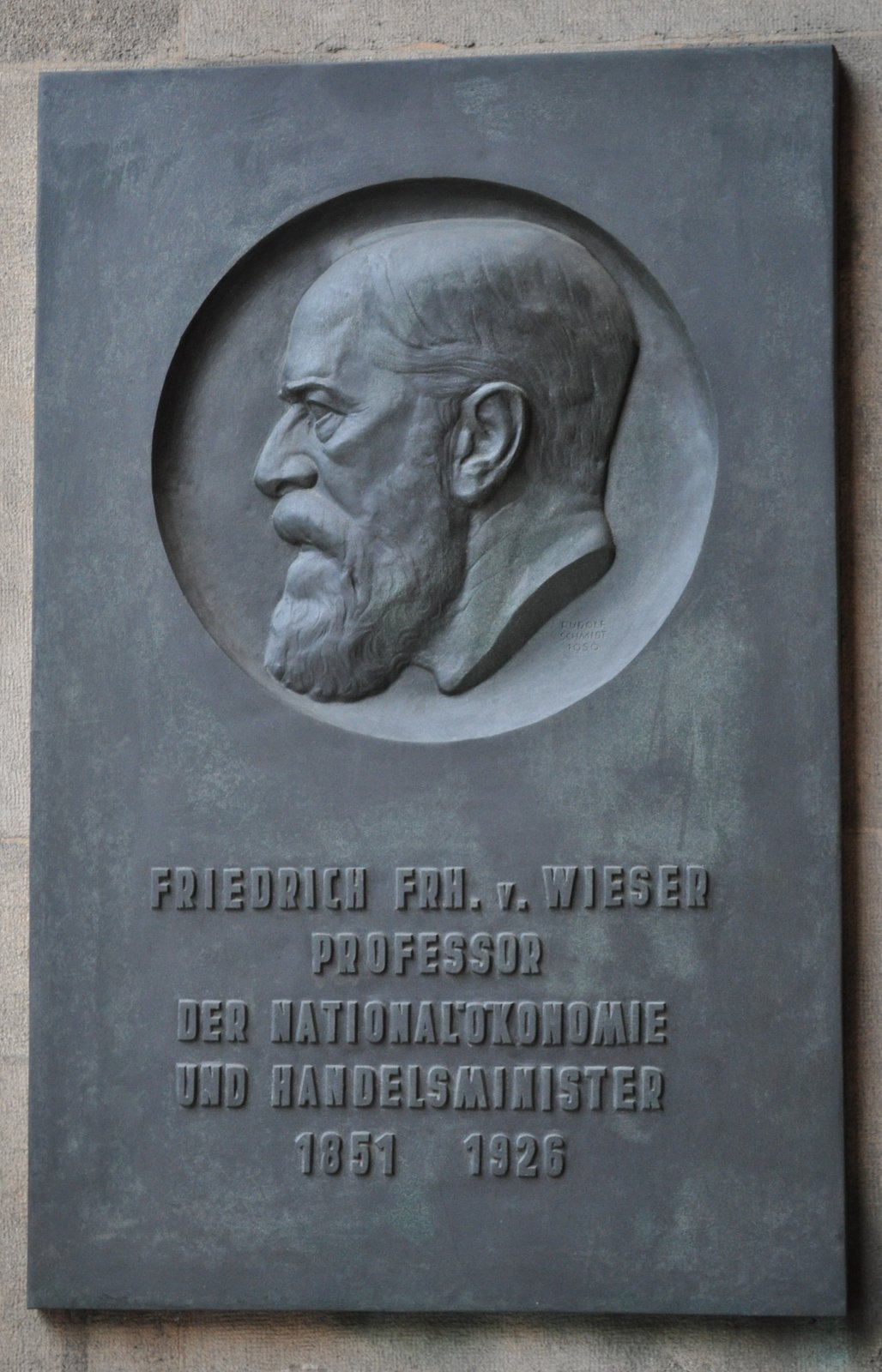
Born on 10 July 1851 in Vienna, the fourth of nine children.
Studied law at the University of Vienna; his engagement with Roman law introduced him to economic questions.
It was only the reading of Menger's "Grundsätze der Volkswirthschaftslehre" (Principles of Economics) that offered Wieser the perspective he had been seeking, which in retrospect he described as a "liberation from the distress of thinking".
Entered the Austrian civil service (Lower Austrian Regional Finance Directorate) in 1872.[1]
Received a travel scholarship in 1875 and studied economics under Karl Knies in Heidelberg, as well as at the universities of Leipzig and Jena.[7]
Completed his Habilitation in 1884 with "Über den Ursprung und die Hauptgesetze des wirthschaftlichen Werthes" (On the Origin and Fundamental Laws of Economic Value) and introduced the concept of marginal utility into economics. His first publication met with little response outside Vienna.[1]
Associate professor (1884) and, from 1889, full professor of political economy at the Karl-Ferdinand University (German University in Prague); Rector in 1901/1902.[1]
Publication of "Der natürliche Werth" (Natural Value; 1889), in which Wieser conceived of the economy as a system ordered by precise laws.[8]
In 1903 he succeeded Carl Menger in the chair of political economy at the University of Vienna; among his students were Ludwig von Mises, Friedrich von Hayek and Joseph Schumpeter.[1]
As one of the very few "Austrians", he wrote several writings that, though moderate in tone, were nonetheless unmistakably war-affirming.
In 1917 he was elevated to the Austrian rank of Baron (Freiherr) and appointed a life member of the Herrenhaus (the upper house of the Imperial Council).[1]
Appointed Minister of Commerce by Emperor Charles I on 30 August 1917, he remained in office across several successive governments until 11 November 1918.[1]
Received an honorary doctorate from the University of Vienna in 1921.[1]
Died on 22 July 1926 in St. Gilgen near Salzburg.
During his study trip to Germany he studied under Bruno Hildebrand in Jena.[1]
Studied economics under Karl Knies in Heidelberg on a travel scholarship.[1]
Studied under Wilhelm Roscher in Leipzig during his study trip to Germany.[1]
Only reading Menger's “Grundsätze” offered Wieser the perspective he had been seeking, which in retrospect he experienced as a liberation from the “distress of thinking”.[1]
Lorenz von Stein is explicitly named in the OeBL entry as Wieser's teacher at the University of Vienna.[1]
Turned to economics during his law studies at the University of Vienna under the influence of Menger's student Friedrich von Wieser.[2]
Weiss studierte an der Rechts- und Staatswissenschaftlichen Fakultät der Universität Wien bei Eugen von Böhm-Bawerk und Friedrich von Wieser.
Mises war nach Wiesers Berufung 1903 an die Universität Wien einer seiner Studenten in der Vorlesungs-Reihe zur Politischen Ökonomie; Wikipedia EN führt Mises explizit als Wieser-Schüler.
Haberler studied at the University of Vienna, among others under Friedrich von Wieser and Ludwig von Mises (doctorate in political science, 1925).[3]
From 1920 studied economics at the University of Vienna, among others under Friedrich von Wieser.[4]
Hayek promovierte 1921 an der Universität Wien zum Doktor der Rechtswissenschaften bei Wieser; Wikipedia EN bezeichnet Hayek als „Wiesers treuesten Schüler".
Received his doctorate in law at the University of Vienna in 1907; identified in the bio_de and in the Klausinger study as a student of Friedrich von Wieser. Wieser developed a father-son relationship with Mayer and supported him by every means.[9]
Wieser und Böhm-Bawerk waren Jugend- und Studienfreunde an der Universität Wien; 1880 heiratete Böhm-Bawerk Wiesers Schwester Paula und wurde damit zugleich dessen Schwager und langjähriger Wegbegleiter.[5]
In 1894 became, alongside Friedrich von Wieser, an associate professor at the German University in Prague.
In 1923 Mayer was appointed to the Vienna chair as successor to Friedrich von Wieser; after Wieser's death Mayer moved into the house Wieser had left behind in Vienna's 19th district.[9]
Friedrich von Wieser in the context of the School as a whole: five generations, their teacher-student lineages, circles and collegial ties.
Show in the family tree →