FOLIO I · THINKER · GEN. 04 · N° 043

Ludwig Lachmann

Works
11
Articles
57
Generation
4.
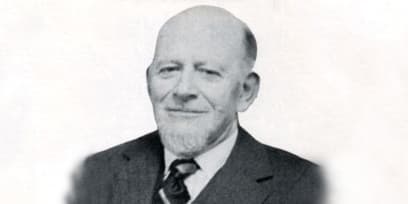
Portrait of Ludwig LachmannPortrait of Ludwig Lachmann: Ludwig Lachmann, Vortrag (1980)
FOL. 04 · N° 043 · Ludwig Lachmann
BIOGRAPHY

Life and Work

Lachmann earned his doctorate in economics at the Humboldt University of Berlin. His interest in the Austrian School, and especially in the work of Carl Menger, was kindled when he spent the summer of 1926 at the University of Zurich. In 1933 Lachmann emigrated to England. There, at the London School of Economics, he was a student and later a colleague of Friedrich August von Hayek. In 1948 Lachmann accepted an appointment at the University of the Witwatersrand in Johannesburg, South Africa, where he remained until his retirement in 1972. He then collaborated with Israel M. Kirzner at New York University from 1974 to 1987. Kirzner's aim was to revive the tradition of the Austrian School. As a visiting professor, Lachmann organized a seminar on the Austrian School in every winter semester from 1975 to 1987. Lachmann developed a radical subjectivism and, given the constant change and hence unpredictability of knowledge, called into question the informational character of prices in general.
Metadata
1. Februar 1906
in Berlin
17. Dezember 1990
in Johannesburg
Generation 4
Life stations

Stations

  1. 1906
    1906
    Birth

    Born on 1 February 1906 in Berlin.

  2. 1923
    1923
    Askanisches Gymnasium

    Attended the Askanisches Gymnasium in Berlin; began his studies in 1923.[5]

  3. ⁦1924–1930⁩
    ⁦1924–1930⁩
    Studies in Law and Economics

    Studied law and economics at the University of Berlin (Friedrich Wilhelm University, later Humboldt University) from 1924.[6]

  4. 1926
    1926
    Summer at the University of Zurich

    Spent the summer of 1926 at the University of Zurich. There his interest in the Austrian School was sparked, particularly in the work of Carl Menger.

  5. 1927
    1927
    Diploma in Economics

    Diploma in economics at the University of Berlin in 1927.[6]

  6. 1930
    1930
    Doctorate at Humboldt University

    Earned his doctorate in economics at the Humboldt University of Berlin.

  7. 1933
    1933
    Emigration to England

    In 1933 Lachmann emigrated to England. At the London School of Economics he was a student and later a colleague of Friedrich August von Hayek.

  8. 1939
    1939
    Marriage to Margot Wulff

    In 1939 he married Margot Wulff in England.[5]

  9. 1940
    1940
    Internment as an “enemy alien”

    Internment as an “enemy alien” from July to December 1940 in England.[4]

  10. 1941
    1941
    Lecturer at the University of London

    From 1941 he was a Lecturer in Economics at the University of London.[6]

  11. ⁦1943–1948⁩
    ⁦1943–1948⁩
    Head of the Economics Department, University of Hull

    Headed the Department of Economics at the University of Hull (Yorkshire, England) from 1943 to 1948.[2]

  12. ⁦1948–1972⁩
    ⁦1948–1972⁩
    University of the Witwatersrand, Johannesburg

    In 1948 Lachmann accepted an appointment at the University of the Witwatersrand in Johannesburg, South Africa. He worked there until his retirement in 1972.

  13. 1956
    1956
    “Capital and Its Structure”

    His principal work Capital and Its Structure (1956) – a contribution to Austrian capital theory.[1]

  14. ⁦1962–1963⁩
    ⁦1962–1963⁩
    President of the Economic Society of South Africa

    President of the Economic Society of South Africa, 1962/63.[2]

  15. 1974
    1974
    South Royalton Conference

    Keynote speaker at the South Royalton Conference in 1974 in Vermont – the spark for the modern revival of the Austrian School in the United States.[3]

  16. ⁦1974–1987⁩
    ⁦1974–1987⁩
    Collaboration with Israel M. Kirzner

    Worked with Israel M. Kirzner at New York University from 1974 to 1987; Kirzner sought to revive the tradition of the Austrian School.

  17. ⁦1975–1987⁩
    ⁦1975–1987⁩
    Winter-semester seminar on the Austrian School

    As a visiting professor, Lachmann organized a seminar on the Austrian School in each winter semester from 1975 to 1987.

  18. 1986
    1986
    Honorary Doctorate, Witwatersrand

    Received an honorary doctorate from the University of the Witwatersrand in 1986.[2]

  19. 1990
    1990
    Death

    Died on 17 December 1990 in Johannesburg.

Relationships

Influences

Influenced by · 2
  1. 1930
    1930
    Werner Sombart⁦(1863–1941)⁩ · Jüngere Historische Schule

    Doctorate in 1930 at the University of Berlin under Werner Sombart, who also introduced him to the work of Max Weber.[5]

  2. 1933
    1933

    At the LSE, Lachmann belonged to Hayek's closest academic circle and developed radical subjectivism further out of this line.

Private seminar, colleagues, Mont Pèlerin · 4
  1. ⁦1930–1933⁩
    ⁦1930–1933⁩

    Lachmann nahm laut Pipeline-Briefing als jüngeres Mitglied am Mises-Privatseminar teil; vor seiner Emigration nach London 1933.

  2. ⁦1935–1948⁩
    ⁦1935–1948⁩

    After his studies, a colleague of Friedrich August von Hayek at the London School of Economics; collaboration until the move to Johannesburg in 1948.

  3. ⁦1974–1987⁩
    ⁦1974–1987⁩

    Arbeitete von 1974 bis 1987 an der New York University mit Israel M. Kirzner zusammen, der die Tradition der Österreichischen Schule wiederbeleben wollte.

  4. Became a close friend of Ludwig Lachmann at the LSE; Lachmann developed his theory of divergent expectations further out of Shackle's work on uncertainty.[6]

Ludwig Lachmann in the context of the School as a whole: five generations, their teacher-student lineages, circles and collegial ties.

SOURCES ON STATIONS AND RELATIONSHIPS13 citations · 4 sources
Topography

Places of Activity

CATALOGUE OF WORKS · CHRONOLOGICAL

The Books

1930s
1930
Faschistischer Staat und korporative Wirtschaft
OriginalGerman
1950s
1956
Ludwig M. Lachmann's 'Capital and Its Structure' (1956) develops a morphological theory of capital that breaks with the assumption that capital is a homogeneous magnitude measurable in money. Lachmann's starting point is the heterogeneity of capital goods: because each good can be put to only a limited range of uses (multiple specificity) and goods must be combined complementarily, the production plans of entrepreneurs form capital combinations whose totality is the capital structure of a society. In a world of unexpected change, these combinations are constantly dissolved and formed anew (capital regrouping). Methodologically, the book relies on process analysis rather than equilibrium analysis and on a subjectivist theory of expectations. In the application chapters, Lachmann reinterprets Böhm-Bawerk's 'roundabout production' as a theorem about economic progress, examines the asset structure (plan, control, and portfolio structure), and tests business cycle theory, linking the Hicksian approach with the Austrian theory of industrial fluctuations.
OriginalEnglish
1970s
1971
Three essays in which Ludwig Lachmann reassesses neglected parts of Max Weber's work for a praxeological theory of action and institutions. The first essay argues that Weber's ideal type is too wide to serve as the central concept of the social sciences and proposes to replace it with the plan: action derives its meaning from the design the actor carries in his mind, which makes interpretation (Verstehen) an observable, comparative study rather than intuition. The second essay builds, on foundations from Weber and Menger, a general theory of institutions, distinguishing designed from undesigned and fundamental from secondary institutions and treating the tension between coherence and flexibility. The third essay applies this scheme to Weber's political thought, his case for parliamentary government and his reading of Hohenzollern Germany and the Weimar Republic. Lachmann was Professor of Economics at the University of the Witwatersrand.
OriginalEnglish
Further editions
1973
In this Hobart Paper, published in 1973 by the Institute of Economic Affairs, Ludwig M. Lachmann examines the methodological dispute within macroeconomic capital and growth theory. His central thesis: both major camps, the neo-Ricardian 'Cambridge' school (Robinson, Sraffa, Kaldor) and the neoclassical formalists (Samuelson, Solow, Hicks), have lost sight of the microeconomic foundations of economic action. Lachmann argues that equilibrium thinking misses the real market process: profits, he holds, are a disequilibrium phenomenon; a uniform 'normal' rate of profit and 'steady-state growth' are fictions; and technical progress is, in principle, a source of disequilibrium. He works this out chapter by chapter, treating profit, interest, growth and innovation in turn, and draws conclusions for income, growth and monetary policy. Methodologically he appeals to subjectivism and divergent expectations, setting the work against the aggregate formalism of his time.
OriginalEnglish
1975
Makroökonomischer Formalismus und die Marktwirtschaft
OriginalGerman
1977
Capital, Expectations and the Market Process: Essays on the Theory of the Market Economy
OriginalEnglish
Further editions
1978
Capital and its Structure
OriginalEnglish
1980s
1986
The Market as an Economic Process
OriginalEnglish
1990s
1994
This volume collects twenty-one essays by Ludwig M. Lachmann, written between 1936 and 1991, that develop a radically subjectivist version of Austrian economics. Two themes recur: the meaning that institutions such as money, law and financial markets hold for the acting individuals who orient their plans around them, and the necessarily divergent expectations that drive trading in asset markets. Part I treats uncertainty, liquidity preference and the business cycle, including Lachmann's argument for a distinct 'secondary depression'. Part II elaborates the heterogeneity of capital and investment repercussions. Part III revisits the Austrian decline of the 1930s, among others the Hayek-Sraffa controversy and the dispute with Knight over capital. Part IV applies subjectivism to Menger, Mises, Shackle and the interpretation of institutions, closing with a programmatic case for a hermeneutic economics.
OriginalEnglish
ARTICLES · 57 CATALOGUED

Essays, Reviews, Lectures

1930s
1936
Commodity Stocks and Equilibrium
OriginalEnglish
1937
Uncertainty and Liquidity Preference
OriginalEnglish
1938
Commodity Stocks in the Trade Cycle
OriginalEnglish
Investment and Costs of Production
OriginalEnglish
1939
On Crisis and Adjustment
OriginalEnglish
1940s
1940
A Reconsideration of the Austrian Theory of Industrial Fluctuation
OriginalEnglish
Further editions
  • Neuüberprüfung der österreichischen Theorie der Konjunkturzyklen
    OriginalGerman
1941
On the Measurement of Capital
OriginalEnglish
1943
The Role of Expectations in Economics as a Social Science
OriginalEnglish
Further editions
  • Die Rolle der Erwartungen in der Nationalökonomie als Sozialwissenschaft
    OriginalGerman
1944
Finance Capitalism?
OriginalEnglish
Notes on the Proposal for International Currency Stabilization
OriginalEnglish
1945
A Note on the Elasticity of Expectations
OriginalEnglish
1947
Complementarity and Substitution in the Theory of Capital
OriginalEnglish
Further editions
  • Komplementarität und Substitution in der Kapitaltheorie
    OriginalGerman
1949
Investment Repercussions
OriginalEnglish
1950s
1950
Economics as a Social Science
OriginalEnglish
Further editions
  • Nationalökonomie als Sozialwissenschaft
    OriginalGerman
Joseph A. Schumpeter, 1983-1950
OriginalEnglish
1951
The Science of Human Action
OriginalEnglish
Further editions
  • Die Wissenschaft vom menschlichen Handeln
    OriginalGerman
1954
Some Notes on Economic Thought, 1933-1953
OriginalEnglish
Further editions
  • Bemerkungen zum nationalökonomischen Denken
    OriginalGerman
1956
The Market Economy and the Distribution of Wealth
OriginalEnglish
Further editions
  • Marktwirtschaft und Vermögensverteilung
    OriginalGerman
The Velocity of Circulation-as-a-Predictor
OriginalEnglish
1958
Mrs. Robinson on the Accumulation of Capital
OriginalEnglish
Further editions
  • Joan Robinson und die Akkumulation des Kapitals
    OriginalGerman
1959
Professor Shackle on the Economic Significance of Time
OriginalEnglish
Further editions
  • Shackles Ansichten über die ökonomische Bedeutung der Zeit
    OriginalGerman
1960s
1962
Cost Inflation and Economic Institutions
OriginalEnglish
1963
Cultivated Growth and the Market Economy
OriginalEnglish
Further editions
  • Kultiviertes Wachstum und Marktwirtschaft
    OriginalGerman
1966
Die geistesgeschichtliche Bedeutung der Österreichischen Schule der Volkswirtschaftslehre
OriginalGerman
Further editions
  • The Significance of the Austrian School of Economics in the History of Ideas
    OriginalEnglish
Marktwirtschaft und Modellkonstruktionen
OriginalGerman
Further editions
  • Model Constructions and the Market Economy
    OriginalEnglish
Sir John Hicks on Capital and Growth
OriginalEnglish
Further editions
  • Sir John Hicks über Kapital und Wachstum
    OriginalGerman
1967
Causes and Consequences of the Inflation of our Time
OriginalEnglish
Further editions
  • Ursachen und Folgen der Inflation unserer Zeit
    OriginalGerman
1969
Methodological Individualism and the Market Economy
OriginalEnglish
Further editions
  • Methodologischer Individualismus und die Marktwirtschaft
    OriginalGerman
1970s
1971
Ludwig von Mises and the Market Process
OriginalEnglish
Further editions
  • Ludwig von Mises und der Marktprozeß
    OriginalGerman
The Rational for Development Programming and the Market Economy
OriginalEnglish
1973
Sir John Hicks as a Neo-Austrian
OriginalEnglish
Further editions
  • Sir John Hicks als Neo-Österreicher
    OriginalGerman
1976
Austrian Economics in the Age of Neo-Ricardian Counterrevolution
OriginalEnglish
From Mises to Shackle: An Essay
OriginalEnglish
On Austrian Capital Theory
OriginalEnglish
On the Central Concept of Austrian Economics: Market Process
OriginalEnglish
Toward a Critique of Macroeconomics
OriginalEnglish
1977
Austrian Economics in the Present Crisis of Economic Thought
OriginalEnglish
Further editions
  • Die Österreichische Schule der Volkswirtschaftslehre und die gegenwärtige Krise des nationalökonomischen Denkens
    OriginalGerman
In Pursuit of the Subjective Paradigm
OriginalEnglish
Further editions
  • Auf der Suche nach dem subjektiven Paradigma
    OriginalGerman
APA
Chicago
German historical style